Malayidal: This is the ritual wearing of Rudraksha beaded chain ( called mala). This marks the commencement of the 41 days of austerity called ‘Vrutham’. This is done at home or temples at the pilgrims’ places.
Mandala Vrutham : Mandates austerities to be followed for the 41 days, before visiting the temple. Simple and pious lifestyle sans any vices is called for during the ‘Mandala Vrutham.
Kettunirakkal : is the ritualistic preparation and packing of offerings to the temple. One needs to carry the ‘Irumudi kettu’ on head to enter through the 18 sacred steps to the temple. This is done at home or temples at the pilgrims’ places.
Petta Thullal: Petta Thullal, is a ritualistic dance to commemorate the victory of good over evil. It’s the recreation of the legend of Lord Ayyappa, after the slaying of demon Mahishi. This is held at Erumeli enroute to Sabarimala trek trail.
Ritual trek: This is trekking to the Sabarimala temple through the mountainous forest chanting ‘Swamiye Saranam Ayyappa’. There are many traditional trails. The one through Pamba is popular and less tedious. The Karimal stretch is the most tedious, all pilgrims have to go through.
Makarajyothi : Witnessing the makarajyothy deepam is the pinnacle point of Sabarimala pilgrimage. At Ponnambalamedu, a jyothi is lit on the Makara Sankranti day (Jan 14 or 15 ) every year. It is believed that the Lord Ayyappan asserts himself as Makara Jyothi to bless his devotees.
Ulsavam is the annual Sabarimala temple festival. Sabarimala utsavam is a 10 days festival , during the Malayalam month of ‘Meenam’ (March-April).
What is Sabarimala pilgrimage?
The Sabarimala pilgrimage is a sacred trek to the Sabarimala temple in Kerala by devotees to worship Lord Ayyappa during the annual Mandalam-Makaravilakku season. The pilgrimage involves a 41-day penance period. Specific rituals & customs to be followed for the pilgrimage.
When is the Sabarimala pilgrimage season?
The Sabarimala pilgrimage season – known as “Mandalam-Makaravilakku,” – typically starts from mid November to mid January each year.
Who is Lord Ayyappa?
Lord Ayyappa is a revered Hindu deity, considered as the son of Lord Shiva and Lord Vishnu (in the form of Goddess Mohini). Therefore the lord is called Hari-Hara putra. He is believed to be born to defeat the demoness Mahishi.
What are the prerequisites for visiting Sabarimala?
Observance of 41-day Penance: Devotees typically observe a 41-day penance period, during which they practice celibacy, maintain strict dietary restrictions, and engage in prayer and meditation.
Are there any age restrictions for visiting Sabarimala?
Traditionally, women devotees of reproductive age (typically between 10 and 50 years old) won’t enter Sabarimala temple. This was based on the belief that Lord Ayyappa, the deity of Sabarimala, is celibate and that the presence of women of menstruating age would disturb his celibacy.
What is the significance of the 18 holy steps at Sabarimala?
The 18 holy steps, also known as “Pathinettam Padi” in Malayalam, hold great significance at the Sabarimala temple. Devotees climb these steps to reach the sanctum sanctorum of the temple. The significance of the 18 holy steps includes:
Symbolism: The 18 steps are symbolic of the 18 weapons Lord Ayyappa received from Lord Parashurama after defeating the demoness Mahishi.
Spiritual Progress: Climbing these steps is considered a sacred act that represents the spiritual progress of the devotee. Each step is believed to symbolize a particular stage in the spiritual journey.
Purification: The climb is seen as a form of purification, where devotees leave behind their materialistic attachments and ascend towards a higher spiritual state.
Dharma, Bhakti, and Jnana: The steps are associated with the three virtues of Dharma (righteousness), Bhakti (devotion), and Jnana (knowledge). Devotees are encouraged to cultivate these virtues during their pilgrimage.
Penance and Austerity: Climbing the 18 steps is considered an act of penance and austerity, reflecting the devotee’s dedication to Lord Ayyappa.
Darshan: The 18 steps lead to the main shrine, and it is believed that a devotee should climb these steps barefoot to have the darshan (sight) of Lord Ayyappa.
What are the practices followed during the pilgrimage?
Observance of Vratham (Austerity): Devotees undertake a 41-day period of vratham, during which they practice celibacy, adhere to a strict code of conduct, and engage in prayer and meditation.
Wearing of Irumudi: Pilgrims carry a special offering known as Irumudi, a two-compartment bag containing sacred items and offerings. The Irumudi symbolizes the devotee’s dedication to Lord Ayyappa.
Witness Makara Jyothi : Devotees gather to witness the Makara Jyothi, a celestial light that appears on the Ponnambalamedu hill, believed to be a divine manifestation of Lord Ayyappa.
Nei Abhishekam: Devotees perform the Nei Abhishekam, anointing the idol of Lord Ayyappa with ghee as a form of ritualistic bathing.
Padi Pooja: Pilgrims offer prayers and perform rituals at the 18 holy steps (Pathinettam Padi) to seek the blessings of Lord Ayyappa.
Climbing the Neelimala Trail: Devotees undertake the challenging trek to Neelimala, a sacred hill, as part of their pilgrimage.
Traditional Attire: Pilgrims wear a specific traditional attire, including black or blue clothes, beaded necklaces, and a Rudraksha mala.
Appam and Aravana Prasadam: Devotees receive the sacred prasadam, which includes Appam and Aravana, distributed at the temple.
Is there a specific dress code for Sabarimala?
Wearing Black or Blue Clothing: Pilgrims are expected to wear plain black or blue traditional attire.
Beaded Necklaces: Pilgrims wear beaded necklaces, called mala, typically made of Rudraksha beads, marking the commencement of the ritualistic lifestyle.
Irumudi: Pilgrims carry the Irumudi, a two-compartment bag, containing the offerings as part of their traditional attire.
Barefoot Travel: Devotees undertake the pilgrimage barefoot as a mark of humility and devotion.
When is Makar Sankranti in 2024?
15 January
When is Makar Sankranti in 2025?
14 January
When is Makar Sankranti in 2026?
14 January
When is Makar Sankranti in 2027?
14 January
Continue Exploring
Poojas at Sabarimala Temple
Details on special poojas at Sabarimala
Sabarimala Temple Pooja Timings
Daily pooja timetable in தமிழ், తెలుగు, ಕನ್ನಡ , English ,…
Sabarimala Ayyappa Temple Opening Dates in 2024
Sabarimala Mandala festival & monthly opening dates
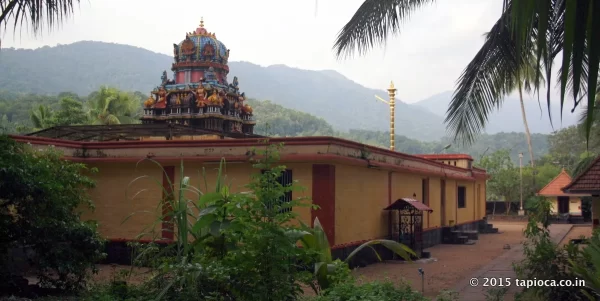
The five Ayyappa Temples in Kerala : Pancha Sastha temples
Kulathupuzha Temple : Lord Ayyappa is worshiped here in the…