Chhatrapati Shivaji Terminus (CST or CSTM in railways parlance) in Mumbai holds many distinctions. It is the busiest railway station in India. Everyday about 1,000 trains and a staggering 2 million passengers pass through this station. It was from here the first train in India chugged out to the nearby Thane.
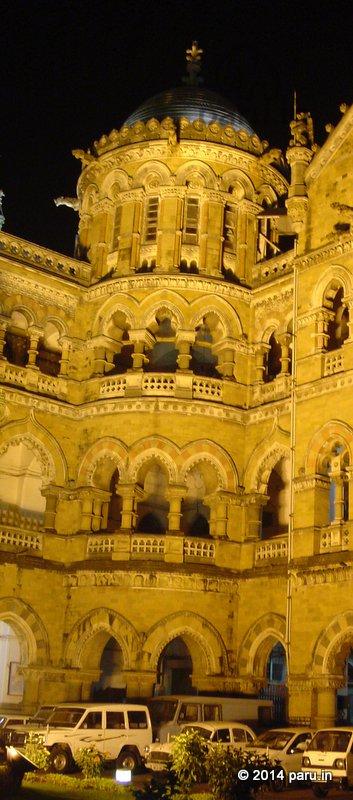
This grandiose station was built in 1887 CE, about 37 years after the first train set out from this station on eastern shore of the island city of Bombay (now Mumbai), to commemorate the Golden Jubilee of Queen Victoria , named as Victoria Terminus and popularly called VT.
Around this area were the storehouses for goods that were imported or exported to and from the city. So when the station was first built the locals called it ‘Bori Bandar’ (place to store sacks).
Somerset born Frederick William Stevens was commissioned in 1877 to design the building. Other noteworthy designs of Stevens are the Royal Alfred Sailor’s Home, the Post-Office Mews near Gateway of India, head offices of the BB&CI Railway at Churchgate, the Oriental Life Assurance Offices at the Flora Fountain and the Municipal Corporation Building , located opposite to Chhatrapati Shivaji Terminus.
By that time of his appointment to design the building , he was already associated with the Sir JJ College of Architecture. The craftsmen from the institute contributed significantly, especially on the sculptural and artistic elements like staircase, wood work, iron grills, brass railings in this building. A large number of Indian themes like peacocks, monkeys, tigers, snakes are used in the carvings and lattice work. More noteworthy is the ‘Statue of Progress’ atop the central dome, its original as well as the restoration work after a lightning strike in the 70s were done by craftsmen of the institute.
Built in European style, Chhatrapati Shivaji Terminus bears a resemblance to the St Pancras Station in London. This was then the headquarters of the ‘Great Indian Peninsular Railways’ and now serves as headquarters of the ‘Central Railways’. The main gateways are flanges by two massive sculptures, of a Lion and Tigre, symbolically representing Briton and India of the Raj era.
The architecture is a fusion of Victorian Italianate Gothic Revival and traditional Indian architecture. This structure has spectacular domes, pointed arches and a different ground plan. The design of the entire structure was very advanced for its time.
In 2004 the Chhatrapati Shivaji Terminus was declared as a UNESCO World Heritage Site.
Even if you are not traveling by train to Mumbai, the Chhatrapati Shivaji Terminus is one of the must visit attractions in Mumbai you can visit as part of a heritage walk in Mumbai between Chhatrapati Shivaji Terminus and the Gateway of India area. It’s about a 2.5 km (1.6 miles) walk between these two famous landmarks of Mumbai
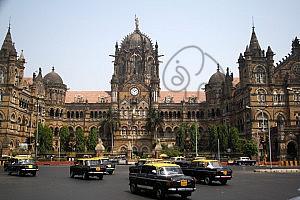
Many inter city trains leave from and terminate here, so do some of the local suburban trains .The rail network is the life line of the city of Mumbai.
This station serves as the start and end point for two of the suburban rail lines namely ‘Central line’ & ‘Harbor line’. There are a number ‘Locals’ (short for local trains) that start here and go beyond Mumbai limits and vice versa.
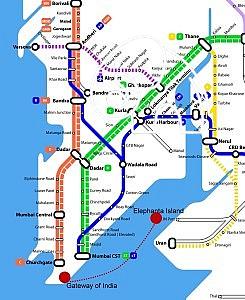
CST is one of the most busy railway stations in the city and country. Thousands of commuters pass thru the doors of this railway station every day. There are many shops and road side eateries on the adjoining footpath near the station.
In the year 1996, the station was renamed after the 17th century, great Maratha warrior and King ‘Chhatrapati Shivaji’. Thus ‘Victoria terminus’ became ‘Chhatrapati Shivaji Terminus’
Unfortunately this same station was witness to the terrorist attack on 26th November 2008. Many passengers waiting to board their out station trains and local trains were injured or lost their lives in this gruesome ordeal.
Continue Exploring
Mumbai to Pune Trains
The Mumbai to Pune rail corridor is one of the…
Puducherry Express
Dadar to Puducherry bound Puducherry Express (Train No.11005) Operates from…

Mumbai to Pattadakal
Distance-wise, Pattadakal is 653km away from Mumbai. If you follow…
Bombay University
Bombay University or Mumbai University as it is now called…