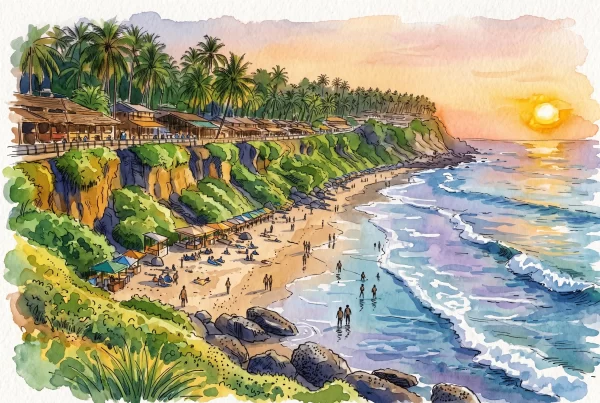
Varkala is a specialized coastal destination that appeals primarily to travellers seeking an atmosphere-driven beach environment focused on yoga, surf culture, and independent cafe dining. Unlike the expansive, resort-heavy tourist beaches of Goa or the highly commercialized, flat shoreline of Kovalam, Varkala offers a dramatic landscape defined by its unique Cenozoic-era laterite cliffs that drop sharply into the Arabian Sea. However, the destination demands realistic expectations: its unique topography is ecologically fragile, facing persistent challenges from structural erosion, unmanaged waste behind the main strip, and unregulated commercial development.
For an ordinary traveller determining if Varkala deserves a place on their itinerary, a single day is structurally insufficient to experience the location, whereas two days or more is the ideal duration. A brief stop yields little value due to the narrow, traffic-restricted access pathways leading to the primary beachfront. Varkala is best chosen as a dedicated multi-day coastal slow-down or a wellness-focused extension of a larger southern Indian journey. It should be skipped by those seeking vibrant nightlife, expansive white-sand beach resorts, or multi-site historic exploration.
The travellers who benefit most from Varkala are independent backpackers, intermediate surfers, yoga practitioners, and photographers drawn to the dramatic visual contrast of the cliffs at sunset. Conversely, elderly travellers, families with strollers, and those with restricted mobility will likely find the steep, crumbling steps, uneven terrain, and lack of municipal infrastructure highly frustrating and logistically difficult to navigate.
Top 10 Reasons to Visit Varkala
- Unique Geo-Heritage Laterite Cliffs: Varkala features the only significant cliff-backed shoreline in Kerala, classified as a National Geo-heritage monument. The stark contrast between the towering red laterite rock formations and the golden beach below creates a coastal topography unmatched anywhere else in the southern peninsula.
- Concentrated Surf and Yoga Culture: Unlike neighboring Kovalam, which prioritizes mass resort tourism, Varkala’s North Cliff functions as a prominent hub for independent surf schools and intensive multi-week yoga teacher training courses, attracting a dedicated wellness demographic.
- Papanasam Beach Spiritual Dualism: The main beach operates simultaneously as a casual tourist recreation area and a sacred site for Hindu ancestral rituals (Vavu Bali). The local belief that these waters sacred creates a highly distinctive coexistence of traditional religious practice and global beach culture.
- Cliff-Top Walking and Dining Strip: The North Cliff features a continuous, pedestrian-only boardwalk lined with open-air seafood restaurants, Tibetan craft shops, and cafes. This elevated path provides uninterrupted, panoramic views of the ocean, which flat-shore destinations like Marari or Cherai cannot replicate.
- Natural Coastal Mineral Springs: The cliffs house active natural freshwater springs containing specific mineral properties. Travellers can access these spontaneous waters directly as they bubble out of the rock face onto the beach, long used by locals for natural therapeutic bathing.
- Janardanaswamy Temple Antiquity: Located just inland from the beach, this 2,000-year-old Vaishnavite shrine features ancient Dravidian architecture, a historic brass bell, and a sacred banyan tree. It provides an immediate historical anchor that contrasts with modern tourist developments.
- The Mangrove Intersect at Kappil: Located just 7 kilometers north of the main cliffs, Kappil Beach features a rare geographical convergence where the calm Edava-Nadayara backwaters flow parallel to the crashing waves of the Arabian Sea, separated only by a narrow, scenic road.
- Sivagiri Mutt Intellectual Legacy: As the final resting place of social reformer Sree Narayana Guru, this serene hilltop ashram complex operates as a peaceful sanctuary for philosophy students, offering a quiet, non-commercial environment away from the beachfront crowds.
- Fresh Catch Custom Dining: The evening dining experience on the cliff involves restaurants displaying the daily local catch—ranging from red snapper to king prawns—on open beds of ice. Diners select their exact fish and specify the spice preparation style before it is charcoal-grilled over open clay ovens.
- Gateway to the Uncommercialized South Coast: Varkala serves as a highly practical base for exploring lesser-known historical outposts, such as the 17th-century British East India Company fort at Anchuthengu (Anjengo), located an easy scooter ride away from the main tourist strip.
Signature Experiences
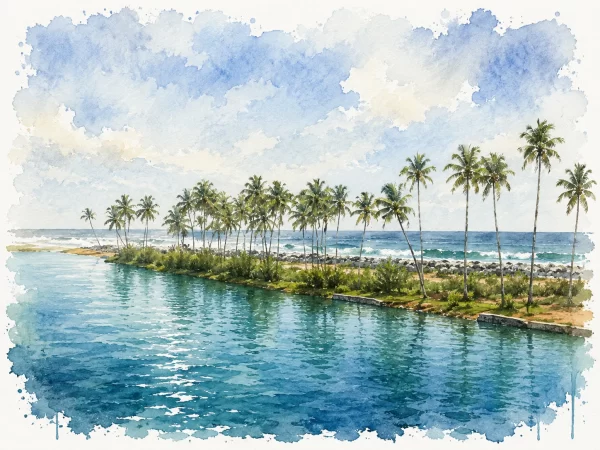
The visual signature of Varkala is undeniably its cliff-to-sea drop-off, a geographic layout that fundamentally shapes how visitors interact with the environment throughout the day.
- Walking the continuous length of the North Cliff pedestrian boardwalk at sunset to observe the changing ocean colors.
- Selecting a fresh catch of Malabar reef fish from a cliff-side restaurant ice display for customized charcoal clay-oven grilling.
- Attending an early morning hatha or vinyasa yoga session in an open-air shala overlooking Black Sand Beach.
- Booking a guided morning surf lesson to navigate the consistent sand-bottom beach breaks at Edava Beach.
- Bathing under the natural freshwater mineral springs that spout directly out of the central laterite cliff faces.
- Riding a scooter along the narrow causeway of Kappil, with open backwaters on one side and the open sea on the other.
- Climbing the steep, historic winding stairs of the Anchuthengu Lighthouse for unobstructed views of the coastal palm canopy.
- Drinking traditional Keralan spiced ginger tea at a cliff-top cafe while watching local fishermen operate wooden outrigger boats.
- Participating in an authentic, multi-day Ayurvedic rejuvenation therapy at a government-certified clinic away from the commercial shacks.
Practical Information
Ideal Duration: 3 days. This timeframe allows one full day for surf, yoga, and cliff exploration, one day for the outlying regions of Kappil and Anchuthengu Fort, and a final day for dedicated relaxation or Ayurvedic therapy.
Best Season: November to February offers dry, pleasant weather with manageable humidity. March to May is excessively hot and humid, while the monsoon period (June to September) brings rough seas, closed beach access, and high risk of cliff landslides.
Budget: Low to Mid-range. Varkala remains exceptionally pocket-friendly for budget travellers and backpackers, with plentiful low-cost guesthouses and hostel beds. Premium, 5-star luxury options are highly limited compared to Kovalam or Kumarakom.
Accessibility: Highly accessible. Located approximately 45 kilometers from Thiruvananthapuram International Airport (TRV), Varkala is well-connected by a dedicated railway station (Varkala Sivagiri) on the major state line, making train travel from Kochi or Trivandrum highly efficient.
Suggested Itinerary: Day 1: Arrive via train, check into a North Cliff guesthouse, spend the afternoon exploring Black Sand Beach, and secure dinner on the main boardwalk. Day 2: Early morning yoga, breakfast at a local bakery, a afternoon scooter excursion north to Kappil Beach, and an evening visit to the ancient Janardanaswamy Temple. Day 3: A morning surf session, a trip south to Anchuthengu Fort, and a final sunset relaxation session at South Cliff.
Best Time of Day: Mornings (6:30 AM – 9:00 AM) are optimum for outdoor activities like surfing, walking, and visiting temples before temperatures climb. Late evenings (5:00 PM – 8:00 PM) are excellent for cliff dining and viewing the dramatic sunset over the sea.
Common Mistakes: Walking too close to the unmarked, crumbling edges of the laterite cliffs where structural failures frequently occur; expecting an active, open nightlife scene due to strict state alcohol licensing laws that limit spirits to select venues; trying to navigate the cliff pathways with heavy roller luggage.
Travel Tips: Carry cash as ATM machines on the North Cliff frequently run out of currency during peak winter months; dress conservatively when leaving the immediate beach area to head into Varkala town or local religious sites; rent a scooter to easily access quieter northern beaches like Odayam and Edava.
Varkala is a visually dramatic but ecologically fragile cliffside haven best enjoyed by independent travellers who value a laid-back lifestyle over commercial perfection.
Final Verdict
Varkala succeeds as a distinctive, highly atmosphere-driven coastal stopover that bridges the gap between active adventure and slow wellness travel. Its dramatic geo-heritage cliff landscape provides a spectacular natural amphitheater for daily sunsets, while its concentrated community of surf schools and yoga shalas offers genuine value for independent travellers. The lower financial barrier to entry makes it an outstanding choice for mid-range and budget itineraries looking for a coastal escape.
However, Varkala will disappoint those seeking an immaculately maintained, luxury resort ecosystem or a pristine, untouched natural wilderness. The destination is visibly strained by urban challenges, including noticeable trash disposal issues behind the main strip, commercial noise, and fragile, safety-barricaded cliff edges prone to seasonal landslides. It lacks the grand heritage monuments of central India and the polished hospitality infrastructure found in other premier beach zones.
Choose Varkala if you want a casual, visually striking, and budget-friendly coastal base focused on surf, yoga, and open-air dining where you can easily explore the surrounding region at your own pace.
Avoid Varkala if you have limited mobility, require quiet luxury resorts, seek high-energy nightclub entertainment, or expect perfectly clean, fully manicured public beach spaces.
Ratings
| Factor | Score (out of 10) |
|---|---|
| Heritage Attractions | 5/10 |
| Overall Experience | 8/10 |
| Photogenic Appeal | 9/10 |
| Activities | 7/10 |
| Crowd & Atmosphere | 6/10 |
| Accessibility | 9/10 |
| Time Efficiency | 8/10 |
| Budget & Value | 9/10 |
| Weather & Comfort | 7/10 |
| Uniqueness | 8/10 |
Overall Score: 76/100
Justification: Varkala ranks very high for its photogenic cliff appeal, excellent accessibility by rail, and strong value for money. It loses points due to basic municipal infrastructure, prominent overtourism during the mid-winter peak, and a low heritage score as it lacks an expansive array of historical monuments.
Who Should Visit?
Perfect For:
- Backpackers and Solo Travellers: The high density of affordable hostels, beachfront cafes, and social hubs makes it exceptionally easy to meet fellow travellers.
- Surfers and Yogis: The consistent sand breaks and institutionalized yoga teacher training programs provide perfect foundations for skill development.
- Landscape Photographers: The towering red laterite rock faces catching the final red rays of the evening sun offer a premium geographic subject.
- Slow Travellers: Ideal for individuals who want to spend multiple weeks living a low-cost, predictable daily routine of wellness, beach walks, and light reading.
Less Suitable For:
- Travellers with Mobility Challenges: Navigating the steep, frequently damaged stone and bamboo stairways to get from the cliff resorts down to the sand is physically taxing.
- Luxury Purists: The destination is short on secluded private villa resorts; most lodging consists of basic clifftop hotels and homestays prone to ambient noise.
- High-End Food and Wine Enthusiasts: Dining is heavily geared toward casual cafe fare and basic grilled seafood; fine dining venues and comprehensive cocktail bars are rare.
Best for Different Travellers
| Traveller | Why This Destination Suits Them |
|---|---|
| Backpacker | Abundant beachside hostels and shared cafe workspaces offer a vibrant social ecosystem on a minimal budget. |
| Budget Traveller | Extremely cheap local dining options, low scooter rental costs, and free beach access keep daily expenditure remarkably low. |
| Couple | Boutique clifftop accommodations offer front-row, romantic views of the ocean sunsets away from the primary helipad crowds. |
| Family | While manageable, families must constantly monitor small children near the completely unfenced and sheer cliff edges. |
| Photographer | Unmatched vantage points from the North and South cliffs to capture dramatic coastal weather changes and high-contrast geological formations. |
| History Lover | Offers mild interest through the historic Janardanaswamy temple and colonial stories of the nearby Anchuthengu East India Company outpost. |
| Luxury Traveller | Generally poorly served; premium visitors are better off choosing the secluded, upscale resort enclaves of Kovalam or Kumarakom. |
| Slow Traveller | Excellent infrastructure for long-term rentals, allowing visitors to sink into a gentle, non-rushed lifestyle pattern for weeks. |
| Weekend Traveller | Highly efficient if flying into Trivandrum airport; you can easily hit the beach within an hour and cover the core cliff strip in 48 hours. |
| First-time Visitor | Provides a highly accessible, easily navigable, and relaxed coastal introduction to India with low hassle levels. |
Nearby Destinations
| Destination | Distance | Why Combine It |
|---|---|---|
| Munroe Island | 50 km | To contrast the high-energy coastal surf waves of Varkala with the absolute stillness of narrow, mangrove-choked inland backwater canals. |
| Jatayu Earth’s Center | 30 km | To view the world’s largest bird sculpture built atop a massive hill feature, offering a dramatic inland change of scenery. |
| Thiruvananthapuram | 45 km | To explore monumental royal history via the Padmanabhaswamy Temple and access comprehensive museum and culinary districts. |
Best Attractions
- Varkala Cliff (North Cliff): The central geo-heritage focal point featuring the main pedestrian boardwalk, panoramic lookouts, and clifftop dining hubs.
- Papanasam Beach: The main sandy beach expanse located directly below the cliffs, famous for its natural holy springs and religious cleansing rituals.
- Kappil Beach and Backwaters: A scenic, serene coastal zone where the road neatly bisects the rolling sea waves from the calm inland lagoon.
- Janardanaswamy Temple: An ancient, culturally vital hill shrine dedicated to Vishnu, boasting a 2,000-year lineage and traditional art features.
- Anchuthengu (Anjengo) Fort: A quiet historic site preserving the square stone ruins and old cemetery of a primary 17th-century British trading base.
Continue Exploring
Two iconic Kerala temples, two distinct experiences—compare Padmanabhaswamy Temple and Guruvayur Temple before you visit.
Choose Padmanabhaswamy Temple for royal heritage and grand architecture, or…
Alleppey vs Kumarakom
Choosing between Alleppey (Alappuzha) and Kumarakom depends on the kind…
Kanthalloor and Marayoor
Kanthalloor and Marayoor are neighboring hill stations in Kerala’s Idukki…
Why Visit Kanthalloor
Kanthalloor's mountains and fertile valleys, where open landscapes, cool mountain…