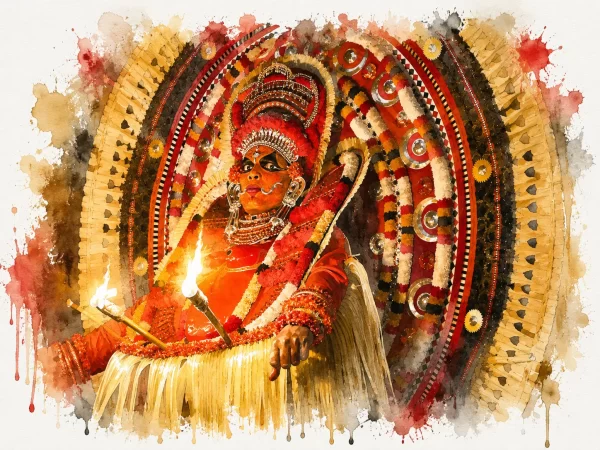
Kathakali is a classical, seated theater performance highlighting structural artistic perfection, whereas Theyyam is an immersive, raw village ritual driven by spiritual trance and fire.
For a traveler exploring Kerala, choosing between Kathakali and Theyyam is not a matter of selecting one performance over another, but rather deciding between two completely different cultural experiences. While both utilize vivid face paint, massive headgears, and intense expressions, their core identities, settings, and structural formats are miles apart. Understanding these differences is essential to matching your travel style with the right experience.
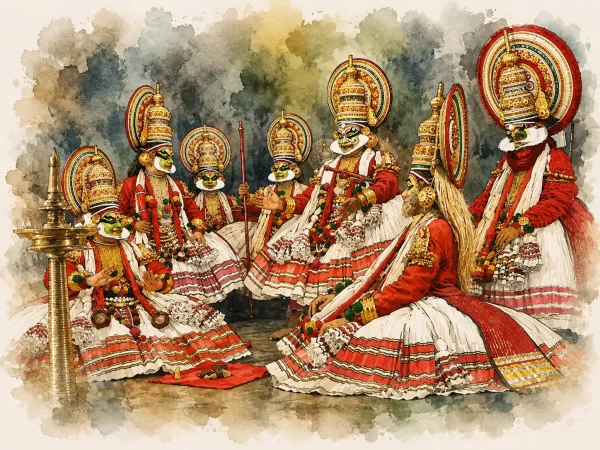
Kathakali is a highly structured, classical dance-drama traditionally performed in theaters or temple courtyards. It relies on a sophisticated grammar of hand gestures (mudras), stylized facial movements, and classical music to enact stories from Hindu epics like the Ramayana and Mahabharata. It is a refined art form designed for an audience seeking a seated, analytical appreciation of classical theater and mythology.
Theyyam, by contrast, is not theater; it is a living, shamanic ritual native to the sacred groves (Kavus) and village shrines of North Kerala. Here, the performer does not merely act; they are believed to become possessed by a deity, transforming into a living god to bless the village, divine the future, and hear local grievances. It is immersive, raw, unpredictable, and deeply spiritual, appealing to travelers who prefer unscripted cultural immersion over a formal stage show.
Quick Comparison
| Feature | Kathakali | Theyyam |
|---|---|---|
| Best Known For | Intricate facial expressions, classical mudras, and dramatic re-enactments of epic literature. | Fire-dancing, blood sacrifices (in some forms), spirit possession, and towering, vibrant headgear. |
| Best For | Cultural purists, families, and short-stay tourists seeking a controlled, predictable evening activity. | Adventure travelers, photographers, and ethnography enthusiasts willing to travel off the beaten path. |
| Atmosphere | Formal, quiet, artistic, and structured. Usually held indoors or in designated cultural centers. | Intense, chaotic, mystical, and communal. Held outdoors through the night into the dawn. |
Detailed Comparison
| Attribute | Kathakali | Theyyam |
|---|---|---|
| Tagline | The silent language of epic gods and demons. | Where the human ends and the divine begins. |
| Identity | A stylized, classical dance-drama requiring years of rigorous physical training. | An ancient ritualistic folk art combining dance, music, and spirit channelization. |
| Historical Importance | Developed in the 17th century under royal patronage, it evolved from earlier temple traditions and drew heavily from ancient Sanskrit theatre, combining classical dance, music, expressive acting, and epic storytelling. | Rooted in ancient tribal traditions, it blends worship, folklore, and striking visual performance while reflecting the history and struggles of Kerala’s marginalized communities. |
| Primary Attractions | Watching the pre-show makeup application and the precise control of eye and facial muscles. | High-energy circumambulations, leaping into hot embers, and individual blessings given to devotees. |
| Photography | Easy and predictable. Stage lighting is consistent; flash photography rules vary by venue. | Exceptional but challenging. Low night lighting, fast movement, dust, and thick crowds require skill. |
| Activities | Seated observation. Some centers offer short introductory talks explaining the gestures. | Standing or walking among villagers, observing rituals, and moving between different shrine zones. |
| Accessibility | Highly accessible. Regular daily commercial shows run in major tourist hubs like Kochi and Munnar. | Difficult. Located mostly in remote villages of Kannur and Kasaragod districts; schedules vary. |
| Family Friendly | Highly friendly. Controlled environment with comfortable seating and standard durations. | Moderate. Overnight hours, loud drums, fire rituals, and lack of seating can exhaust young children. |
| Backpacker Friendly | Moderate. It is convenient, but some find the commercialized tourist variants lack depth. | Highly friendly. Offers raw cultural depth, local village interactions, and authentic experiences. |
| Budget Friendliness | Inexpensive. Tickets for daily cultural center shows typically cost between 300 to 500 INR. | Free to watch at shrines, but transit, rural stays, or hiring local guides can add up. |
| Time Required | 1 to 2 hours total, including the option to watch the makeup application beforehand. | 6 to 12 hours. Events typically run all night long or start before daybreak. |
| Best Season | Year-round at cultural centers, though grander temple festivals happen from November to April. | Strictly seasonal. Occurs only between late October and May; virtually non-existent in monsoon. |
| Uniqueness | A rare theatrical form where music and gestures completely substitute spoken dialogue. | A rare survival of communal, caste-defying spirit worship that transforms humans into deities. |
| Overall Experience | An intellectual, artistically refined, and comfortable aesthetic experience. | An intense, chaotic, sensory, and deeply emotional community ritual. |
Why Kathakali?
Kathakali is designed for travelers who value artistic precision, classical traditions, and travel convenience. It offers a structured window into Kerala’s epic lore without disrupting a standard vacation schedule.
Major Highlights
- The Chutti (Makeup) Process: Arriving an hour early allows you to watch the performers lie flat on the ground while artists apply elaborate paste layer by layer.
- Mudra Demonstration: Most tourist centers provide a spoken breakdown of the sign language before the play begins, turning it into an educational experience.
- Unmatched Facial Discipline: You get to witness actors isolate individual facial muscles, moving their eyes, cheeks, and eyebrows independently at incredible speeds.
- Predictable Schedules: Shows happen every single day in hubs like Fort Kochi, meaning you do not have to plan your entire vacation around a single performance date.
- Comfortable Infrastructure: You are provided with standard seating, fans or air conditioning, and clear views, making it physically effortless to take in.
- Epic Storytelling: The clear narrative structure lets you follow iconic stories from the Mahabharata or Ramayana through stylized performance.
Why Theyyam?
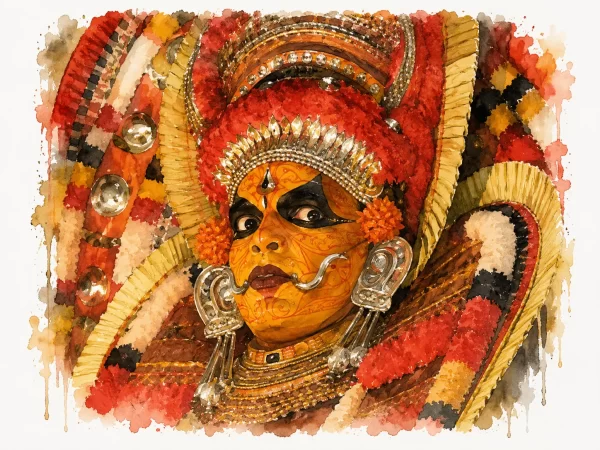
Theyyam is built for travelers who seek authentic cultural immersion, raw energy, and experiences far away from commercialized tourism. It demands effort but rewards you with an unfiltered look at village traditions.
Major Highlights
- A Living Ritual: There are no stages or artificial barriers; you stand side-by-side with villagers inside sacred groves where the faith is completely real.
- The Fire Dance (Thee Chamundi): Watching a performer clad in heavy ornaments leap directly into heaps of glowing, red-hot embers is an unforgettable visual.
- Massive Headgears (Mudi): Certain Theyyams, like the Pottan or Bhagavathy forms, feature towering head structures made of bamboo and coconut fronds that stretch several meters high.
- Intense Sonic Environment: The continuous, hypnotic thumping of the Chenda drums combined with traditional horns creates an overwhelming auditory atmosphere.
- Direct Interaction: After the ritual dance, you can approach the possessed Theyyam performer to receive individual blessings, advice, or a personal word.
- Unscripted Atmosphere: Every shrine has its own local legends, meaning the flow of events depends on village customs rather than a fixed theatrical script.
Pros & Cons
Kathakali Pros
- Highly comfortable, accessible, and very easy to fit into a tight itinerary.
- Educational introductions make the symbolic hand gestures easy for foreigners to interpret.
- Very safe and manageable for families traveling with toddlers or elderly relatives.
Kathakali Cons
- The shortened tourist shows can feel a bit mechanical or commercialized compared to overnight temple variants.
- The seated theater format lacks the raw, high-energy adrenaline of an open-air ritual.
Theyyam Pros
- Offers completely authentic, uncommercialized exposure to rural Kerala’s heritage.
- Provides high-octane visual spectacles, including fire-walking and trance performances.
- Photographers gain access to dramatic, high-contrast, real-life ritualistic subjects.
Theyyam Cons
- Logistically exhausting; requires traveling to remote northern villages and navigating fluid, unpredictable schedules.
- The overnight setups lack basic tourist infrastructure like Western toilets or seating chairs.
Best for Different Travelers
| Traveler Type | Recommendation | Why This Choice Fits |
|---|---|---|
| History Enthusiast | Kathakali | Its structured grammar provides a clear look at how classical Sanskrit dramaturgy and royal patronage shaped Kerala’s elite performing arts. |
| Nature Lover | Theyyam | Performances are held in ancient, biologically diverse sacred groves (Kavus) that reflect early animistic nature worship. |
| Backpacker | Theyyam | The journey into remote northern villages offers the kind of gritty, authentic, and inexpensive cultural immersion that backpackers thrive on. |
| Family | Kathakali | The predictable timing, indoor comfort, and educational format make it safe and highly manageable for children and seniors alike. |
| Couple | Kathakali | It integrates perfectly into a relaxed, romantic evening date after walking around historical Fort Kochi or exploring Munnar. |
| Solo Traveler | Theyyam | The community-centric village atmosphere makes it incredibly easy to connect directly with locals who welcome solo explorers. |
| Luxury Traveler | Kathakali | Premium heritage hotels and private resorts frequently arrange clean, exclusive, and high-end private performances for their guests. |
| Photographer | Theyyam | The combination of fire, motion, emotional trances, and dramatic low-light settings yields raw, striking documentary-style images. |
| Weekend Traveler | Kathakali | A standard two-hour evening block leaves your weekend completely free for sightseeing, spice shopping, or boat cruises. |
Summary
Choose Kathakali if your trip centers around central or southern hubs like Kochi, Alleppey, or Munnar, and you want an organized, comfortable, and intellectually stimulating introduction to Indian mythology. Choose Theyyam if you are visiting between November and May, have a few extra days to head into northern districts like Kannur, and want to experience an intense, high-energy communal ritual where the line between the human audience and the divine performer completely dissolves.
Bottom Line
Kathakali is a highly sophisticated, classical art form that emphasizes discipline, precise facial expressions, and complex hand gestures. It offers a structured and comfortable theatrical experience that fits effortlessly into any standard travel itinerary, making it highly suitable for casual sightseers and families looking for a convenient cultural evening.
Theyyam is a powerful, seasonal shamanic ritual deeply rooted in the rural soil of North Kerala. It demands significant travel effort, flexible plans, and a willingness to brave crowded, overnight outdoor settings, but rewards the traveler with a raw, high-energy spectacle of fire, trance, and genuine community worship.
Continue Exploring
Two iconic Kerala temples, two distinct experiences—compare Padmanabhaswamy Temple and Guruvayur Temple before you visit.
Choose Padmanabhaswamy Temple for royal heritage and grand architecture, or…
Alleppey vs Kumarakom
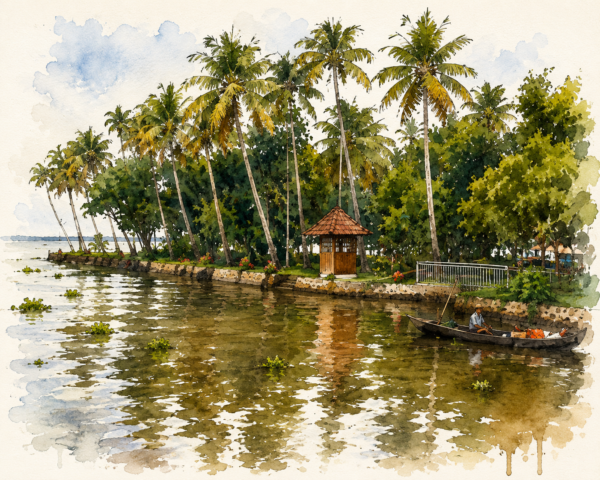
Choosing between Alleppey (Alappuzha) and Kumarakom depends on the kind…
Kanthalloor and Marayoor
Kanthalloor and Marayoor are neighboring hill stations in Kerala’s Idukki…
Why Visit Kanthalloor
Kanthalloor's mountains and fertile valleys, where open landscapes, cool mountain…