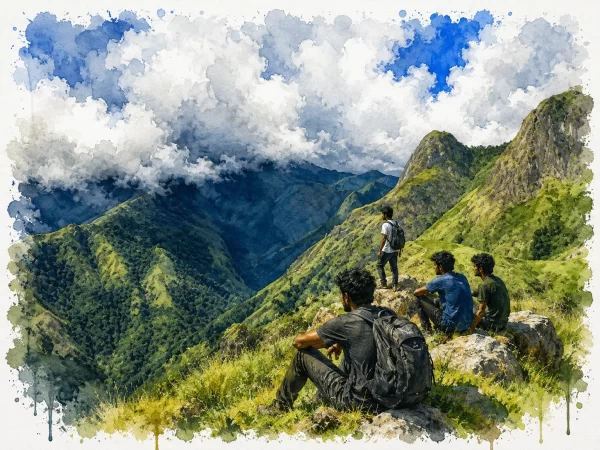
Meesapulimala is one of Kerala’s most rewarding mountain destinations, but it appeals to a specific kind of traveller. If your ideal holiday involves trekking through high-altitude landscapes, watching sunrise above a sea of clouds, and spending time in relatively untouched nature, Meesapulimala is likely to become a highlight of your Kerala itinerary. If, however, you prefer destinations with numerous attractions, easy road access, shopping, cafés and minimal walking, nearby Munnar will generally provide a more satisfying experience.
Unlike Munnar, which is built around tea estates and roadside viewpoints, Meesapulimala is about immersion in the Western Ghats. There are no bustling town centres or heritage monuments here. Instead, the destination offers long mountain ridges, shola forests, grasslands and one of the highest accessible trekking experiences in South India. The attraction is not a single viewpoint but the journey across an entire mountain ecosystem.
For photographers, hikers, wildlife enthusiasts and travellers who value landscapes over landmarks, Meesapulimala easily justifies a full day and is even better experienced with an overnight stay near the trekking base. Families travelling with very young children, elderly visitors with limited mobility, or travellers looking for a relaxed sightseeing day may find the physical effort outweighs the rewards. In many Kerala itineraries, Meesapulimala works best as an extension to Munnar rather than a replacement for it.
Top 10 Reasons to Visit Meesapulimala
1. One of South India’s Finest Mountain Treks
At approximately 2,640 metres, Meesapulimala is Kerala’s second-highest peak after Anamudi. Unlike Anamudi, where trekking is highly restricted because of conservation measures, Meesapulimala can be explored through regulated trekking programmes. This makes it one of the highest mountain summits that ordinary travellers can legally experience in the Western Ghats.
The route passes through undulating ridgelines, shola forests and open grasslands rather than dense forests, offering continuously changing scenery throughout the trek. The journey itself is the attraction, not simply reaching the summit.
Better than nearby alternatives: Most viewpoints around Munnar are reached by car. Meesapulimala offers a genuine mountain journey where every kilometre reveals a different perspective of the landscape.
2. Rolling Grasslands Rarely Seen Elsewhere in Kerala
The landscape around Meesapulimala differs dramatically from the tea plantations that define Munnar. Instead of cultivated slopes, visitors encounter sweeping natural grasslands interspersed with patches of ancient shola forest.
The broad ridges create uninterrupted panoramic views extending across Kerala and Tamil Nadu, particularly during clear weather. These high-altitude grasslands are among the most distinctive ecosystems in the Western Ghats and are becoming increasingly rare due to habitat loss elsewhere.
Travellers expecting endless tea gardens may be surprised by how wild and untouched the scenery feels.
3. Sunrise Above a Sea of Clouds
For many experienced trekkers, sunrise is the defining reason to visit Meesapulimala.
Early morning often reveals valleys filled with cloud while only the highest ridges remain visible above them. As sunlight gradually reaches the grasslands, the colours change rapidly from cool blue tones to warm golden hues.
Unlike many popular sunrise viewpoints in Kerala, visitor numbers remain relatively controlled, allowing a quieter and more immersive experience.
Morning also provides the clearest visibility before afternoon mist frequently develops.
4. A True Wilderness Experience Near Munnar
One of Meesapulimala’s greatest strengths is what it lacks.
There are:
- No amusement parks.
- No souvenir shopping streets.
- Very few permanent commercial structures.
- Minimal traffic.
- Little visual pollution.
The emphasis remains firmly on the landscape rather than tourism infrastructure.
This makes the destination particularly attractive to travellers who feel that many famous hill stations have become overly commercialised.
5. Exceptional Landscape Photography
Meesapulimala is one of Kerala’s strongest destinations for landscape photography because nearly every stage of the trek presents a different composition.
Photographic opportunities include:
- Long mountain ridges
- Cloud inversions
- Misty valleys
- Shola forests
- Seasonal wildflowers
- Golden-hour grasslands
Unlike destinations dominated by a single monument, photographers can spend an entire day capturing changing weather, light and terrain.
6. Peace and Limited Crowds
Many attractions around Munnar become busy during weekends and holidays. Meesapulimala generally feels quieter because access is regulated and requires more planning.
The result is:
- Less crowding
- Lower noise levels
- Cleaner surroundings
- Better opportunities for wildlife observation
- A stronger sense of solitude
Travellers looking for a peaceful mountain experience often find Meesapulimala significantly more satisfying than Munnar’s busiest viewpoints.
7. Rich Biodiversity of the Western Ghats
Meesapulimala lies within one of the world’s recognised biodiversity hotspots. Although wildlife sightings are never guaranteed, the mountain supports an important mix of endemic grasslands and shola forests that are home to numerous bird species, butterflies and native plants.
Depending on the season, visitors may encounter flowering meadows, colourful insects and a wide variety of high-altitude flora that are absent from Kerala’s lower elevations.
Nature enthusiasts often appreciate the ecological significance of the landscape as much as the mountain views themselves.
8. A Genuine Sense of Achievement
Unlike destinations where visitors simply drive to a viewpoint, Meesapulimala rewards physical effort.
Completing the trek creates a genuine sense of accomplishment that enhances the overall experience. Many travellers remember the mountain not because of one spectacular viewpoint, but because of the gradual progression across multiple ridges before finally reaching the summit.
This makes the experience emotionally more rewarding than conventional sightseeing.
9. An Excellent Complement to Munnar
Rather than replacing Munnar, Meesapulimala expands what the region offers.
Munnar excels in:
- Tea plantations
- Scenic drives
- Museums
- Cafés
- Family sightseeing
Meesapulimala adds:
- Mountain trekking
- Remote landscapes
- High-altitude ecosystems
- Adventure
- A stronger wilderness experience
Together they provide one of Kerala’s most balanced mountain itineraries.
10. One of Kerala’s Most Distinctive Natural Experiences
Kerala offers beaches, backwaters, tea estates and wildlife reserves, but relatively few destinations combine altitude, trekking, panoramic mountain scenery and ecological importance in the way Meesapulimala does.
It requires more planning than many tourist attractions and is physically more demanding than a typical sightseeing excursion. Those willing to make the effort are usually rewarded with one of the state’s most memorable outdoor experiences.
If your travel style prioritises authentic landscapes over convenience, Meesapulimala deserves serious consideration. For travellers seeking cafés, shopping and numerous roadside attractions, Munnar will generally remain the better choice.
Signature Experiences
- Trek to Kerala’s Second Highest Peak – The defining experience. The gradual climb across ridgelines is more memorable than the summit itself.
- Watch Sunrise Above the Clouds – One of the best sunrise experiences in Kerala when weather conditions are favourable.
- Walk Through Shola–Grassland Ecosystems – Experience one of the Western Ghats’ rarest high-altitude habitats, where evergreen shola forests alternate with rolling grasslands.
- Stay at the Base Camp – Spending a night near the trekking base transforms the experience by allowing an early start and avoiding the morning rush.
- Photography During Golden Hour – Soft morning light, drifting clouds and layered mountain ridges make this one of Kerala’s finest landscape photography locations.
- Experience the Silence of the High Mountains – Unlike most tourist viewpoints around Munnar, long stretches of the trail are remarkably quiet.
- Observe Seasonal Wildflowers – Depending on the time of year, grasslands bloom with numerous native flowering plants.
- Cloud-Walking Experience – During monsoon and post-monsoon months, clouds frequently sweep across the trail, creating rapidly changing landscapes.
- View the Western Ghats from High Ridges – Continuous panoramic views extend across Kerala and neighbouring Tamil Nadu.
- Spot High-Altitude Birds and Butterflies – Birdwatchers often encounter endemic species adapted to montane habitats.
- Explore Rhodo Valley (when included in trekking programmes) – The valley offers a gentler landscape of streams, grasslands and forest edges.
- Experience Responsible Eco-tourism – Visitor numbers are regulated, helping preserve the fragile mountain ecosystem.
Popular Attractions
| Attraction | Why It Deserves Your Time |
|---|---|
| Meesapulimala Peak | Kerala’s second-highest mountain and the ultimate objective of the trek, offering sweeping panoramic views. |
| Rhodo Valley | One of the most scenic trekking routes, known for grasslands, streams and peaceful mountain scenery. |
| Silent Valley Viewpoints (along the trek) | Multiple natural viewpoints provide changing perspectives rather than a single lookout. |
| Shola Forests | Rare high-altitude evergreen forests that support exceptional biodiversity. |
| Mountain Grasslands | The defining landscape of Meesapulimala and one of the least disturbed ecosystems in southern India. |
| Base Camp | The starting point for most organised treks and overnight stays. |
| Kolukkumalai (nearby) | Often combined with Meesapulimala for spectacular sunrise views and visits to one of the world’s highest tea estates. |
| Top Station (nearby) | An easily accessible viewpoint offering a useful contrast to Meesapulimala’s trekking experience. |
Nearby Destinations
| Destination | Approx. Distance | Why Combine It? |
|---|---|---|
| Munnar | 25 km | The natural base for visiting Meesapulimala, offering tea estates, restaurants, accommodation and family-friendly attractions. |
| Kolukkumalai Tea Estate | 20 km | Combines beautifully with Meesapulimala for sunrise, jeep rides and visits to one of the world’s highest tea plantations. |
| Top Station | 18 km | An excellent roadside viewpoint that complements the more demanding mountain trek. |
| Eravikulam National Park | 30 km | Offers wildlife, Nilgiri Tahr sightings and mountain scenery without a strenuous trek. |
| Mattupetty Dam | 22 km | Suitable for families interested in boating and relaxed sightseeing after trekking. |
| Echo Point | 20 km | A quick stop that contrasts with Meesapulimala’s wilderness atmosphere. |
| Chinnar Wildlife Sanctuary | 60 km | Adds dry forest landscapes and wildlife, creating a more varied Western Ghats itinerary. |
| Thekkady | 95 km | Ideal next destination for travellers wanting to combine mountains with wildlife and spice plantations. |
Best for Different Travellers
| Traveller | Why Meesapulimala Suits Them |
|---|---|
| Backpacker | Excellent value for travellers who prioritise trekking and nature over luxury amenities. |
| Budget Traveller | Moderately suitable. Trek costs are reasonable, but transport and accommodation around Munnar can increase overall expenses. |
| Couple | Ideal for active couples who enjoy hiking, mountain landscapes and quiet surroundings rather than resort-style holidays. |
| Family | Best for families with older children who enjoy walking. Less suitable for toddlers, elderly relatives or those with limited mobility. |
| Photographer | Outstanding. One of Kerala’s finest destinations for sunrise, cloudscapes, mountain ridges and landscape photography. |
| History Lover | Limited appeal. Meesapulimala is primarily a natural destination with little historical or architectural heritage. |
| Luxury Traveller | Moderately suitable. Luxury accommodation is available in Munnar, but the trek itself is intentionally simple and nature-focused. |
| Slow Traveller | Excellent. Spending two or more days allows visitors to appreciate changing weather, mountain ecology and nearby attractions without rushing. |
| Weekend Traveller | Good if based in Munnar, though early planning is essential due to trekking schedules and access regulations. |
| First-time Visitor to Kerala | Highly recommended for travellers interested in Kerala’s mountain landscapes, but it should ideally be combined with Munnar rather than visited on its own. |
Key Takeaway
Meesapulimala is not a sightseeing destination in the conventional sense—it is an experience built around trekking, mountain landscapes and immersion in nature. Travellers expecting numerous attractions may feel there is “not much to do.” Those who value wilderness, photography and the satisfaction of reaching one of Kerala’s highest peaks often consider it one of the most rewarding experiences in the Western Ghats.
Verdict: Meesapulimala is one of the finest mountain experiences in South India, but it is not a destination for everyone. If you enjoy trekking, high-altitude landscapes, wildlife, and spending time in relatively untouched nature, it deserves a full day or even an overnight stay. If your priority is ticking off famous tourist attractions with minimal effort, nearby Munnar will usually provide better value for your time.
Unlike most attractions around Munnar that can be reached by road, Meesapulimala rewards effort. Reaching Kerala’s second-highest peak requires advance planning, permits or guided access depending on the route, and a willingness to walk several kilometres. The payoff is an experience that feels distinctly different from the crowded viewpoints around Munnar: rolling montane grasslands, shola forests, sweeping ridgelines and an unusual sense of isolation that is increasingly rare in India’s popular hill stations.
For photographers, hikers and nature enthusiasts, Meesapulimala is often the highlight of an entire Kerala itinerary. Families with young children, elderly travellers or visitors expecting cafés, shopping and numerous sightseeing stops may find the journey physically demanding and the destination comparatively limited. Rather than competing directly with Munnar, Meesapulimala complements it—Munnar offers the tea-estate landscapes and tourist infrastructure, while Meesapulimala showcases the Western Ghats in a far wilder and less developed form.
Continue Exploring
Two iconic Kerala temples, two distinct experiences—compare Padmanabhaswamy Temple and Guruvayur Temple before you visit.
Choose Padmanabhaswamy Temple for royal heritage and grand architecture, or…
Alleppey vs Kumarakom
Choosing between Alleppey (Alappuzha) and Kumarakom depends on the kind…
Jeep vs Car at Munnar sightseeing
1. The “Jeep Sightseeing” Experience In Munnar, these are typically…
A jeep safari in Munnar is one of the most popular ways to experience the region’s rugged terrain, hidden waterfalls, and remote tea plantations that are inaccessible by regular cars.
Popular Jeep Safari Routes Key Details for Travelers Tips for…